
You have a qualifier on Sunday, a 6am flight on Friday, and a personal item that has to hold a laptop bag’s worth of gear without going over the sizer at the gate. Competitive practice is a daily-reps problem, and the road is where reps go to die. A stiff hotel-wifi connection, a borrowed Bluetooth controller with 80ms of lag, and a dead battery at hour four of a five-hour flight will all cost you more than a bad week of scrims.
This list is built around one constraint: everything here has to fit in a single carry-on personal item alongside a Switch or Switch 2, a phone, and a charger. Picks are chosen on measurable things – polling rate, latency in milliseconds, watt-hours, grams – with a budget and a premium option in each category.
- Backbone One (2nd Gen) – The Controller That Removes Bluetooth From the Equation
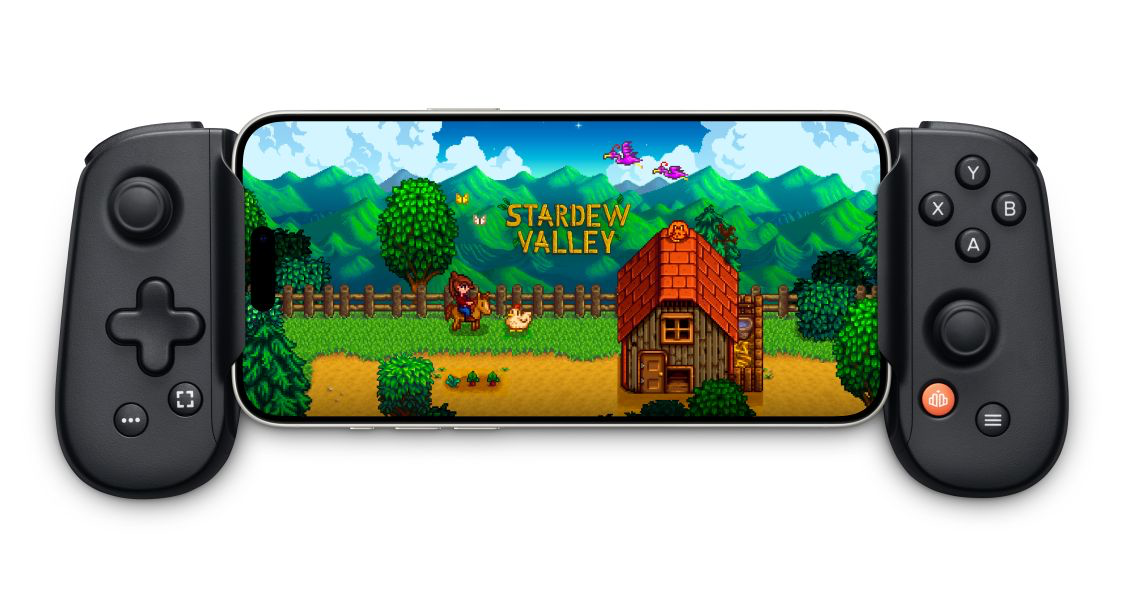
Cloud gaming’s biggest enemy on the road isn’t your connection, it’s the input chain. Bluetooth controllers add somewhere in the 15-30ms range before your packets even leave the phone. The Backbone One is a wired telescoping clamp that plugs straight into USB-C or Lightning, so controller latency drops to effectively nothing and you get a pass-through charging port on the bottom – which matters when GeForce Now at 120fps is cooking your battery.
At roughly 138 grams it disappears into a jacket pocket. The second-gen unit’s magnetic adapters let it fit thick cases and larger phones without you fighting the clamp every time. Full-size hall-effect-adjacent sticks it does not have, but the D-pad is genuinely usable for fighting games, which is more than most telescoping pads can claim.
$99 – $119
- GameSir X2s Type-C – The Budget Wired Clamp
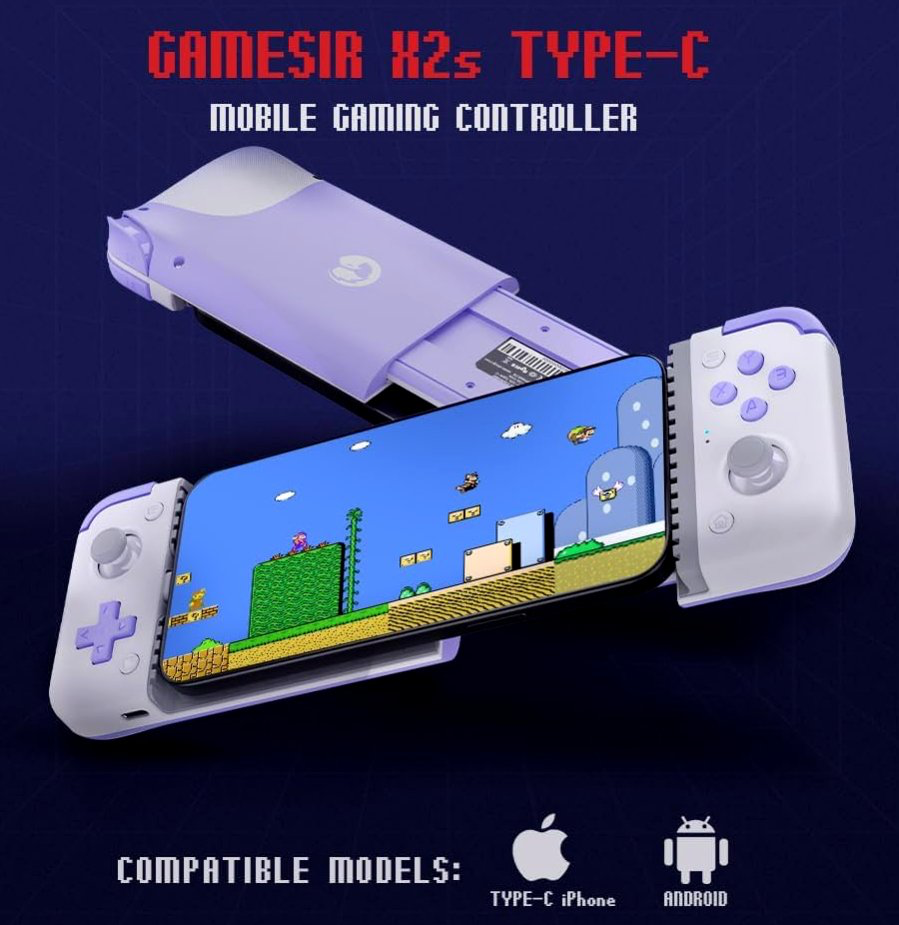
If $110 for a phone grip feels absurd, the GameSir X2s does the same core job for less than half. It’s wired USB-C, so you keep the sub-5ms input path, and it uses hall-effect sticks – meaning no drift after six months of being crushed in a bag. The extension arm stretches to around 179mm, which swallows a Pro Max or an Ultra with a case still on.
The trade-offs are honest ones. Build is plastic where the Backbone is dense, and the companion app is scrappier. But for a player who mainly needs a reliable practice input for cloud sessions in an airport gate area, nothing about the X2s will actively lose you a game. Keep it as your spare even if you buy the Backbone.
$45 – $59
- 8BitDo Ultimate 2C Wireless – Hall Sticks for Switch Practice
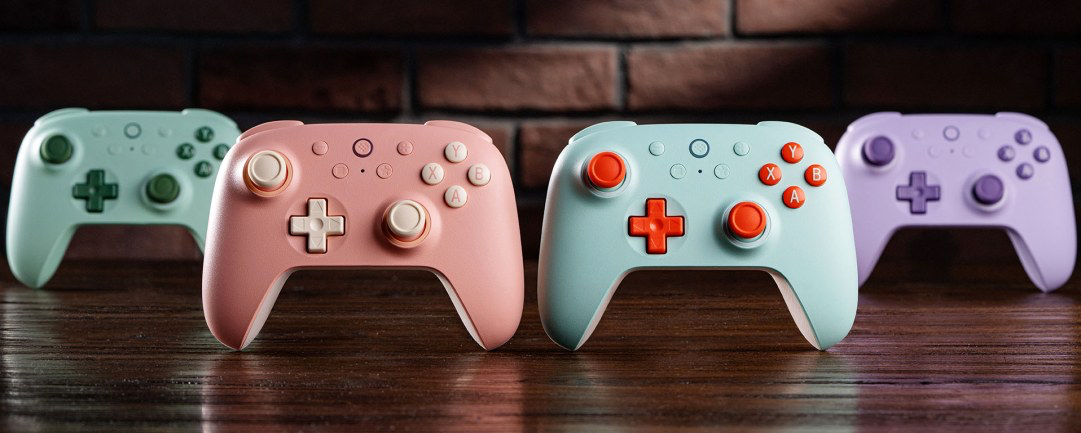
Joy-Con drift is a competitive liability and Nintendo’s own Pro Controller costs about $70. The 8BitDo Ultimate 2C runs hall-effect sticks and hall triggers, connects to Switch over 2.4GHz with its own dongle rather than Bluetooth, and lands somewhere near 1000Hz polling in wired mode. Practically, it feels immediate in Smash and doesn’t develop a phantom left-stick input three months in.
It weighs about 200 grams and has no gyro or rumble on the 2C variant, which is the compromise for the price. If gyro aiming matters to your title, step up to the full Ultimate 2 Wireless. Either way, the dongle is the reason to buy: hotel rooms are Bluetooth-saturated and 2.4GHz with a dedicated receiver rides through interference far better.
$29 – $45
- Anker 737 Power Bank (24,000mAh, 140W) – The Airline-Legal Ceiling
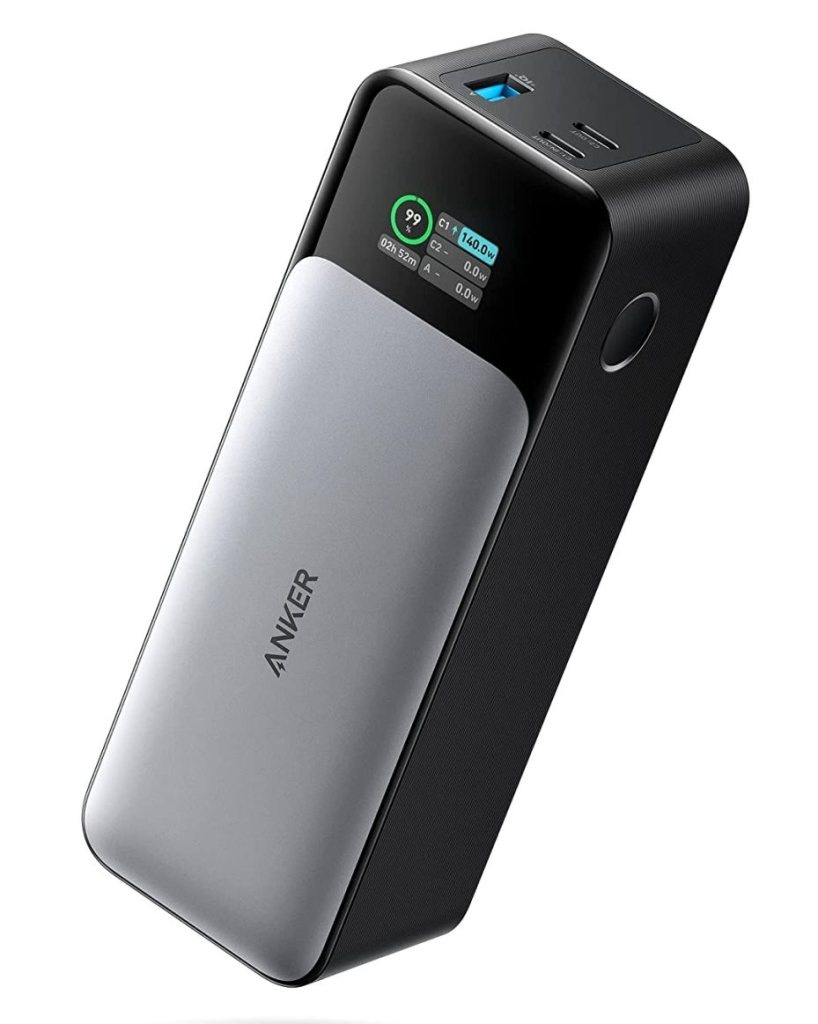
The FAA and most international carriers cap spare lithium batteries at 100Wh without airline approval. The Anker 737 sits at 86.4Wh, which is as close to that ceiling as you can practically buy, and its 140W USB-C PD 3.1 output means it charges a Switch dock-speed, tops a phone at full rate, and will still push a 16-inch laptop if you bring one. The digital display shows actual watts in and out, not a vague four-LED guess.
It’s 630 grams, so it’s not a pocket item – it lives in the bag. Real-world, expect roughly four full Switch OLED recharges or two and a half days of heavy cloud gaming on a phone. That’s the difference between practicing during a delay and staring at the wall.
$99 – $149
- Anker Nano Power Bank 10,000mAh – The Pocket Backup
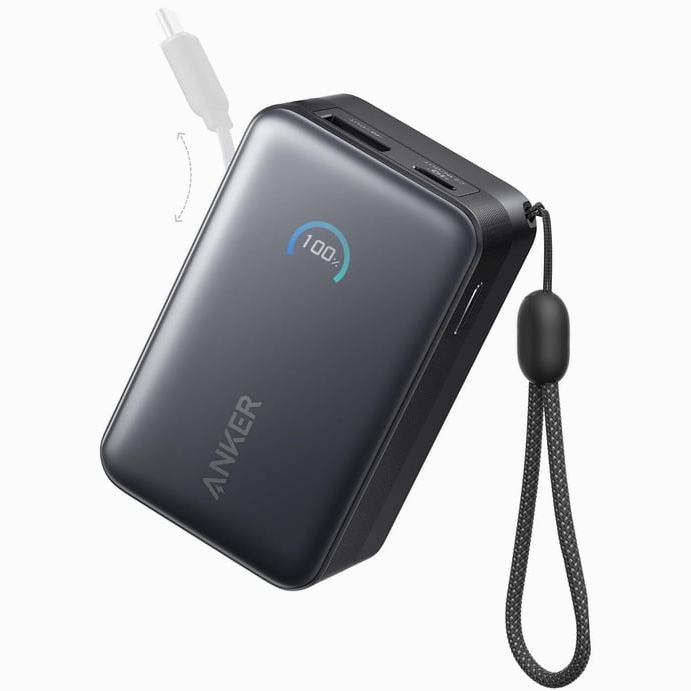
Not every trip justifies 630 grams. The 10,000mAh Nano-class banks weigh around 200 grams, output 30W over USB-C, and slide into the seat pocket in front of you. Thirty watts is enough to charge a Switch while you’re playing rather than just slowing the drain, which is the specific test cheaper 18W banks fail.
Look for the version with the built-in retractable USB-C cable. It removes one more loose item from the bag and stops you discovering at 35,000 feet that your only cable is in checked luggage. Two of these plus the 737 is overkill; one of these alone is the right answer for a weekend regional trip where you’re carrying a phone, a controller and nothing else.
$25 – $45
- UGREEN Nexode 65W GaN Charger – One Brick, Three Devices

Carrying three wall warts is how a personal item fills up. A 65W GaN charger with two USB-C ports and a USB-A splits into roughly 45W and 20W when loaded, which covers a Switch on the dock port and a phone simultaneously. GaN internals mean the whole thing is about the size of a matchbox and around 110 grams – compare that to Nintendo’s own 39W brick, which is bigger and does one job.
Buy the version with foldable pins. The international variants with swappable UK, EU and AU heads save you packing a separate adapter, and for a player hopping between LAN events in different regions that’s a genuine volume saving. Just confirm the unit is rated 100-240V, which essentially all GaN chargers are.
$29 – $49
- GuliKit or Genki Audio Bluetooth Transmitter – Low-Latency Sound for Switch
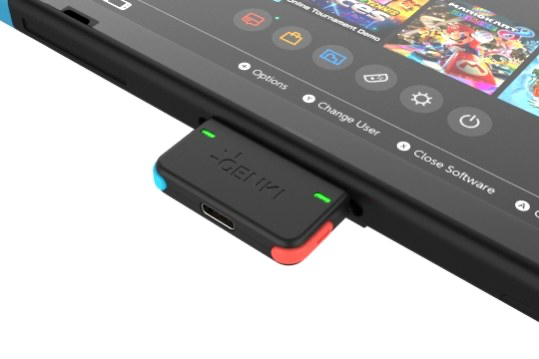
Switch Bluetooth audio is technically supported and competitively useless – it runs standard SBC with latency often past 150ms, which is fatal for anything with audio cues. A dedicated aptX Low Latency USB-C transmitter that plugs into the Switch’s bottom port drops that to roughly 40ms with matching earbuds, and the good ones support dual pairing so a practice partner can listen in.
These dongles are the size of a thumbnail and weigh under 10 grams, so there’s no packing cost. The key spec to check is whether it supports aptX Adaptive or LL, not just aptX – the plain codec buys you almost nothing. Pair it with buds that also support the codec, or you’ve spent $50 to get SBC back.
$35 – $60
- Sony WH-1000XM5 or Anker Soundcore Space Q45 – ANC That Actually Isolates
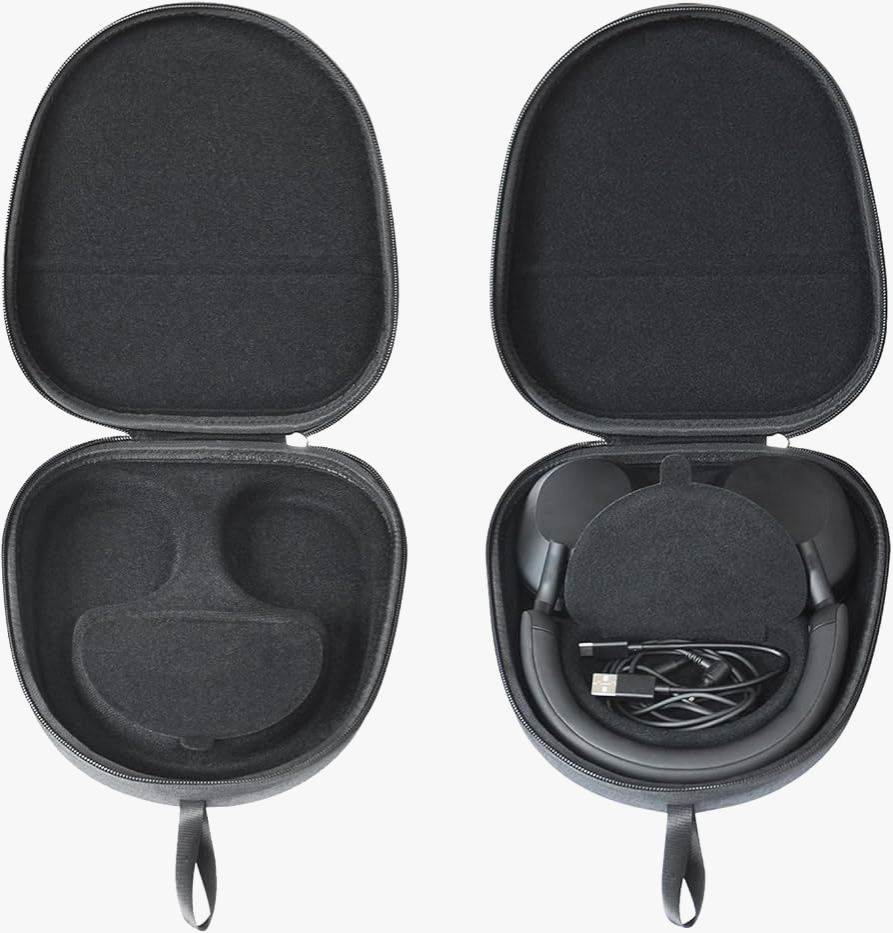
Cabin noise sits around 80-85dB at cruise, and you cannot hear footsteps under that. The XM5 is still the reference for broadband ANC and, critically, has a 3.5mm cable in the box – plug it into the Switch headphone jack and latency is zero. Thirty hours of battery with ANC on means one charge covers a return trip. It folds flat rather than into a ball, so it wants the laptop sleeve slot, not a corner.
The Space Q45 is the budget answer: around 50 hours, competent ANC, and the same wired fallback for about a quarter of the price. It’s less refined, but on an aircraft the ANC is doing most of the work anyway. Either way, wired play in the air, wireless in the hotel.
$79 – $399
- tomtoc Slim Switch Case – Protection That Doesn’t Cost You Volume

A Switch 2 in a bulky hard shell is a brick. The tomtoc slim line uses a hardened EVA shell around 18-20mm thick, holds the console with Joy-Cons attached plus eight to ten game cards, and passes the drop tests that matter more than a spec sheet – a fall from tray-table height onto a hard floor. The key detail is a raised lip so the screen never contacts the shell.
Combine it with a tempered glass protector at 9H hardness; Switch 2’s screen is glass but still scratches against game cards rattling loose in a bag. Together they cost under $35 and eat about the same space as a paperback. Skip the shoulder-strap bags with room for a dock unless you’re travelling to an event where you’ll actually plug into a monitor.
$19 – $35
Building the Kit Without Blowing Your Carry-On
Work backwards from weight and volume, not from want. A realistic competitive travel kit – phone clamp, Switch in a slim case, 10,000mAh bank, GaN charger, cables, headphones – lands somewhere around 1.2kg and fits a 12-litre personal item with room for clothes. Add the 737 power bank and a full-size controller and you’re pushing 2kg, which is fine if you’re only doing one flight and terrible if you’re connecting through three airports.
The spec that decides most of these purchases is latency. Anything in your input or audio chain measured above about 40ms is a training handicap, and you’ll build muscle memory against a lag profile that won’t exist when you get home. Wired inputs, 2.4GHz dongles with their own receiver, and aptX LL audio are non-negotiable; standard Bluetooth for competitive practice is not.
- Keep spare batteries under 100Wh or expect them to be confiscated at the gate – and never pack them in checked luggage.
- Prioritise hall-effect sticks over brand name; drift kills a controller faster than any impact will.
- Choose one charger that serves every device rather than one per device – it’s the single biggest volume saving in the bag.
- Always carry a 3.5mm cable, even with wireless headphones, so the Switch headphone jack stays your zero-latency fallback.
The Short Version
If you buy three things, buy a wired phone clamp, a hall-effect controller with a 2.4GHz dongle, and a 65W GaN charger. Those cover input integrity and power for both platforms, cost under $200 together, and add maybe 400 grams. Everything else on this list is refinement: the big Anker bank for long-haul, the aptX LL dongle for games where audio cues decide rounds, ANC for the flight itself.
The point isn’t to rebuild your setup in a hotel room – that’s a losing project. It’s to keep the reps honest so that when you sit down at your real rig, nothing feels foreign. Gear that adds latency is worse than no practice at all, and gear that doesn’t fit the bag never leaves the house.